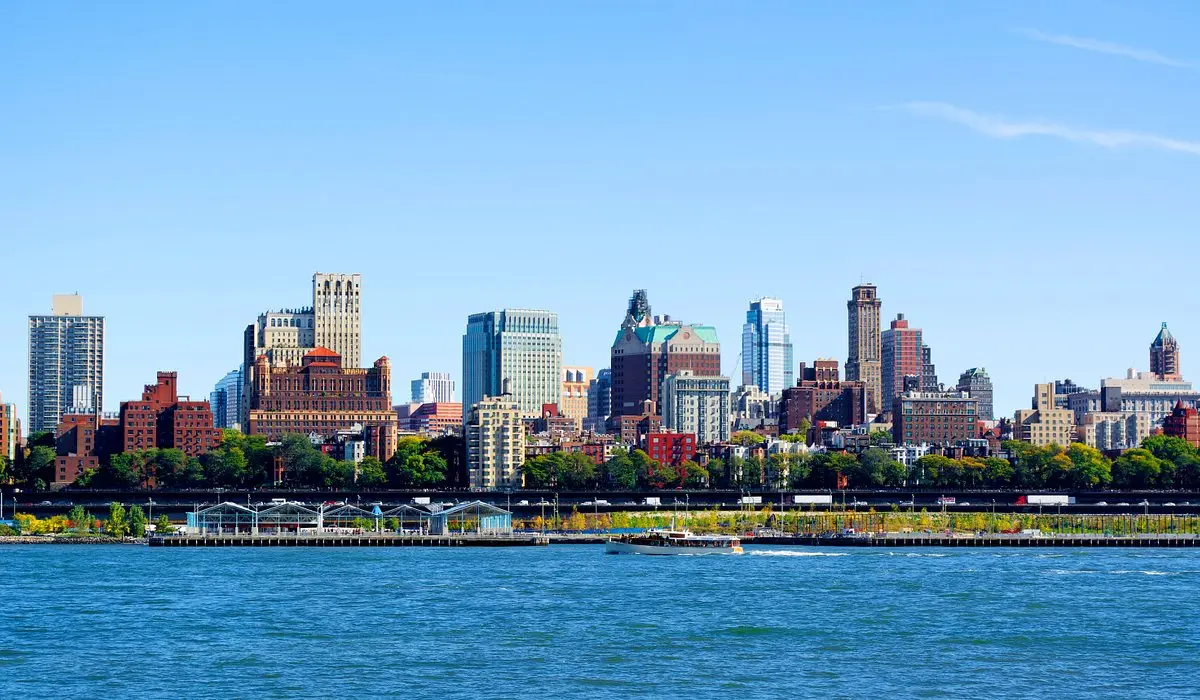
A commute lays that out in order. This guide walks through a typical Brooklyn day, light by light, so you can see where Transitions lenses would help and where a different option might serve you better.

How the light along your daily route, from sidewalk to platform to office, shapes which Transitions lens suits you best.
Transitions lenses are photochromic, which simply means they darken in response to ultraviolet (UV) light and return to clear when it fades. Whether that’s useful to you depends on one thing: how often your day moves you between outdoor light and indoor light.
A commute lays that out in order. This guide walks through a typical Brooklyn day, light by light, so you can see where Transitions lenses would help and where a different option might serve you better.
At home. Indoor lighting contains little to no UV, so your lenses stay clear.
The walk to the station. This is where lenses begin to darken. Even a short walk outdoors exposes them to UV. On overcast mornings, lenses still activate because UV passes through clouds, though they won’t darken as much as in direct sun.
The platform and the train. This depends on your line. Underground stations and tunnels have no daylight, so lenses clear. But many Brooklyn lines run on elevated or open-cut track, where daylight reaches you on the platform and sometimes through the train windows. Glass filters some UV, so lenses darken less behind a train window than they do on the sidewalk.
Stepping back outside. The moment you’re in daylight again, lenses start to darken, usually within seconds.
The office. Indoors, lenses return to clear. A seat beside a sunny window may keep a light tint, but typical office lighting lets them clear fully.
Lunch, errands, and the ride home. The cycle repeats. Several outdoor moments and several indoor ones per day is the pattern Transitions lenses are designed for.

Transitions lenses respond to UV light, not to how bright something looks. That’s why a dim subway platform doesn’t darken them, and why a bright but heavily overcast sky still can.
Temperature plays a role too. Warmer conditions help lenses clear faster, and cold slows the process and deepens the tint. On a freezing January morning, expect lenses to stay dark a bit longer after you step into the lobby. That’s normal behavior for the lens, and knowing it in advance makes it easy to live with.
Fade-back speed has improved across generations. Current Transitions GEN S lenses clear faster than the generation before them, and most wearers stop noticing the changes altogether.
Standard Transitions lenses, including GEN S, darken very little behind a windshield, because most windshields block the UV that activates them. That’s the lens doing exactly what it’s designed to do.
If driving is part of your routine, there are better-matched options. Transitions XTRActive and XTRActive Polarized are designed to activate behind a windshield, though they won’t reach the darkness they achieve outdoors. Transitions Drivewear is built specifically for driving. You can see how the full lineup compares on our Transitions Portfolio page.
With Transitions GEN S, no. They’re completely clear indoors. XTRActive lenses carry a very slight tint indoors, which is the trade-off for being darker outside and active behind glass. For some wearers that’s a non-issue, for others it’s the deciding factor, and it’s an easy thing to settle together before ordering.
Yes, and it’s built into the lens. Transitions GEN S lenses filter blue-violet light at all times, according to Transitions up to 32% indoors and up to 85% outdoors, so it’s a quiet benefit for anyone who spends the workday in front of a screen.
I’d think of it as a welcome extra rather than the reason to choose Transitions. Long screen days tend to tire the eyes mostly through how we use them, so a current prescription, regular breaks, and the right lens design for your viewing distance matter most. If screen time is a large part of your day, tell me and we’ll look at the whole picture together.
A strong fit if you move between outdoors and indoors many times a day, if you’ve been squinting your way through bright mornings or juggling a second pair, or if clip-ons never worked well with your frame. Transitions lenses also handle in-between conditions well, like shaded streets, partly cloudy days, and early light, because they adjust to the amount of UV present rather than switching between two fixed states.
Worth a closer look if much of your outdoor time happens inside a car. In that case XTRActive, Drivewear, or a dedicated pair of prescription sunglasses may be the better match, and many customers pair Transitions for daily wear with sunglasses for driving. That’s the eyewear wardrobe idea in practice: each pair does one job well.
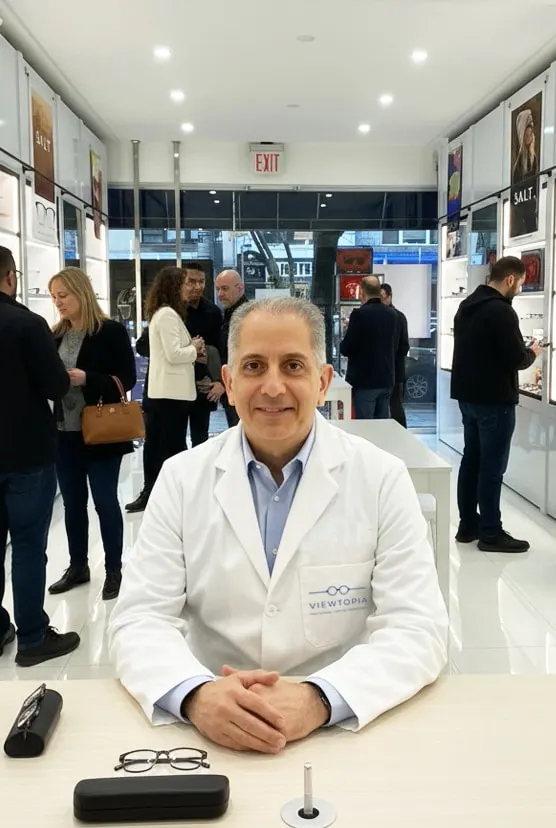
Abe Zami · NYS Licensed Optician #005762-01 · ABO-NCLE Certified #018067 · Transitions Experts Certified
I’ve spent more than 35 years in the optical industry, across wholesale, lab, and retail, and I’m Transitions Experts certified. VIEWTOPIA patients come from Sheepshead Bay, Flatbush, Midwood, Gravesend, Bensonhurst, Marine Park, and across the borough and beyond.
A conversation about Transitions looks different for someone who rides the B or Q every day than for someone who drives or works entirely indoors. That’s why I start with your routine and choose the lens afterward.

VIEWTOPIA Optical is at 810 Kings Highway, between East 8th and 9th, about 7 minutes from the Kings Highway B/Q or F stations. No appointment is necessary. Bring your current prescription, tell me about your day, and we’ll find the right Transitions lens, or tell you if another option suits you better.
Walk-ins are welcome during business hours, and you’re always welcome to call with questions first: 718-676-0260.