
Brooklyn
Viewtopia Optical
- 01 / Home
-
02 / What We Offer
-
03 / Eyewear Lines
-
04 / The Story
- 05 / Reach Us
- 06 / Questions
Flat-top bifocals fitted correctly — reading zone placed where your eyes actually look, not where a chart says. Walk in to 810 Kings Highway with your prescription. No appointment needed.
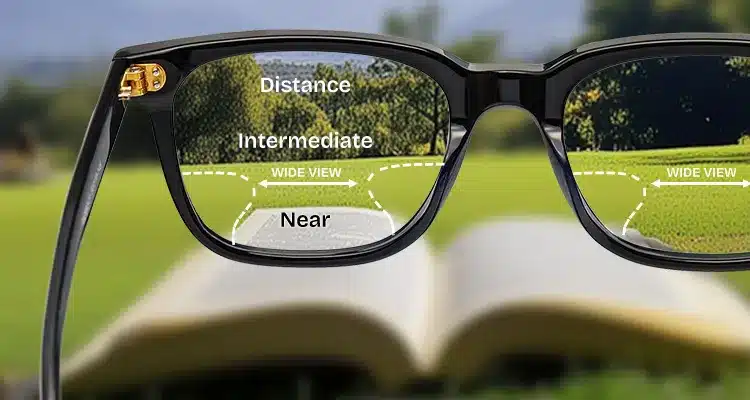
A bifocal lens has two distinct optical zones — one for distance, one for near — separated by a visible line. The upper zone handles distance vision. The lower zone, called the segment, handles near tasks like reading, phone screens, and fine detail work. The design has been around for over two centuries.
The fitting protocol is not complicated. But getting it right requires one specific measurement done carefully: segment height — the vertical distance from the bottom of the lens to the top of the reading zone. Too high, and the segment cuts across your line of sight. Too low, and you have to tilt your chin down to find the reading zone at all. The prescription numbers matter. The segment placement matters just as much. For corridor-blended alternatives, see the progressive lenses page.

Fitting bifocal lenses at a single Brooklyn address across thousands of patients produces a specific kind of institutional knowledge — one that shows up in how the measurement is taken, not just that it is taken.
Lens materials have changed and frame styles have evolved. What has not changed is the segment height measurement itself — because it was never a shortcut that technology needed to replace. It is a precise physical measurement taken from the patient’s pupil position in their chosen frame. Decades of fittings teach which frame depths create segment crowding problems, which add powers require more conservative height placement, and how patients describe a segment that’s off by even two millimeters.
Bifocal fittings at this Brooklyn address
Authorized to dispense in New York State
Multifocal lens fitting & dispensing competency
Three measurements anchor every bifocal order at Viewtopia. None of them can be carried over from a previous pair without re-checking. All of them are verified in your chosen frame, with your head at its natural angle — not posed, not reading a chart.
Vertical distance from the bottom of the lens to the top of the reading zone — marked at your pupil position in your chosen frame, with your head in natural posture. Not chin-up. Not reading a chart. The position your head actually holds throughout the day. A 2mm error puts the segment either above your line of sight or below your reading position.
The additional magnification in the lower segment, written as a positive number on your prescription such as +1.75 Add or +2.25 Add. Tells the lab how much magnifying power the reading zone requires. Applies to both flat-top and executive designs — the design determines coverage width; the add power determines the strength of that coverage.
A bifocal lens needs adequate vertical frame height to include both the distance zone and the full near segment without crowding. If a frame doesn’t have sufficient depth, the near segment can be cut off during glazing. This is assessed before the order is placed — not after the lenses arrive.
For strong prescriptions, lens material also factors in — bifocal lenses can be made in high-index materials when prescription strength warrants it. See the high-index lenses page for material specifics.
One patient came in after her third pair of bifocals in four years. She had never had a pair she wore comfortably. The prescription had been confirmed accurate at each visit. The issue was that segment height had never been measured from her actual pupil position in her actual frame. Fifteen minutes of careful measurement, the correct height placed in the frame she chose, and she returned two weeks later to say they were the first pair she wore without thinking about them.
The measurement sequence runs in a specific order — because the order matters. Frame selection first; segment measurement after; verification before fabrication. No step is skipped, no measurement is carried over from a previous pair.
You choose your frame before any measurement is taken. The frame’s eye size, bridge position, and where it sits on your face all determine where the segment needs to land. Choosing the frame after the measurement produces a result that may not apply to the frame you actually select.
With the chosen frame in place, Abe marks your pupil position while you hold your head at its natural, unprompted angle — not looking up, not reading a chart. The position your head holds when you’re walking, working, or in conversation. That mark anchors the segment height calculation.
The segment top is placed at or slightly below the pupil mark depending on the design and your activities. Patients who do more intensive near work get conservative placement; patients with more distance demand get slightly higher placement. The decision is made in your presence, not back at the lab.
Before the order leaves for the lab, the prescription notation — including the near addition power, any cylinder and axis values for astigmatism, and the optical center placement — is confirmed against the written Rx. Anything unusual triggers a conversation before fabrication, not after.
A bifocal lens requires adequate frame depth to fit both zones without crowding. If your chosen frame doesn’t have enough vertical height, the near segment may be cut off during glazing. This is assessed at this stage — before the order is placed. If the frame needs to change, that conversation happens now.
When the finished glasses arrive, segment placement is verified against the original measurement before you put them on. Frame alignment is confirmed. You wear them in the shop and confirm near and distance vision are clear. Adjustments to nose pads and temple angle happen on the spot if needed.
Three phases run the full visit. Plan for about an hour. Walk in ready to choose a frame.
Abe reviews your prescription, confirms the near addition power, and identifies any values — significant astigmatism, prism correction — that affect how the bifocal segment must be positioned.
Patients who’ve had difficulty with previous bifocals describe what felt off. That information guides the measurement. The fitting conversation often catches failures before they get repeated.
Frame selection and segment height measurement happen in sequence — frame first, then the height marked against your pupil position in that specific frame.
Once the frame is chosen and the height is marked, the order is specified to the lab with all relevant fitting parameters: segment design, height, optical center position, and lens material appropriate for the prescription strength.
When the finished glasses arrive, Abe verifies the segment placement against the original measurement before the patient puts them on.
Frame alignment is confirmed. The patient wears the glasses and confirms near and distance vision are clear and comfortable. Adjustments to frame position — nose pads, temple angle — are made on the spot if needed. The fitting doesn’t end at pickup.
Steps from the Kings Highway B and Q station, in the heart of southern Brooklyn. No appointment needed — walk in with your current prescription during business hours.
810 Kings Highway
Bet. East 8th & 9th
Brooklyn, NY 11223
Monday – Wednesday10:00 AM – 6:00 PM
Thursday10:00 AM – 7:00 PM
Friday10:00 AM – 1:00 PM
SaturdayClosed
Sunday11:00 AM – 5:00 PM
Gravesend · Midwood · Bensonhurst · Sheepshead Bay · Flatbush · Bay Ridge · Manhattan
Bring your current prescription to 810 Kings Highway, Brooklyn, NY 11223. Walk in any time — no appointment required. Call ahead at 718-676-0260 if you have questions about your prescription before making the trip, or use the contact form and Abe will review your Rx before you come in.
NYS License #005762-01 · ABO-NCLE Certificate #018067
Common questions about segment height, Rx requirements, frame compatibility, bifocal vs. progressive choice, complex prescriptions, and switching frames. If your question isn’t here, call or walk in.