Brooklyn Resource  ·  Transitions Lenses for NYC Commuters

Does Your Brooklyn Commute Create the Right Conditions for Photochromic Lenses?

A lighting-environment analysis for riders who move through underground platforms, open streets, and office interiors every single day.

Block 01

Why a Subway-Based Commute Is One of the Best Tests for Photochromic Lens Fit.

If you want to know whether photochromic lenses will actually serve you, the structure of a Brooklyn subway commute offers a rigorous test.

That’s not a product endorsement. It’s a function of what the commute actually demands from your vision. The question isn’t whether photochromic lenses are good technology. They are, under the right conditions. The real question is whether your specific daily pattern creates enough UV variation across enough distinct environments to make automatic lens adaptation meaningful rather than incidental.

For most Brooklyn subway riders, the answer is yes. But the reasoning deserves more than a simple conclusion. This page works through the lighting environments themselves, the physics that drives photochromic activation, and the specific variables that should shape your decision — including some honest caveats that don’t always make it into a sales conversation.

Block 02

A Morning Commute, Broken Down Into Lighting Environments.

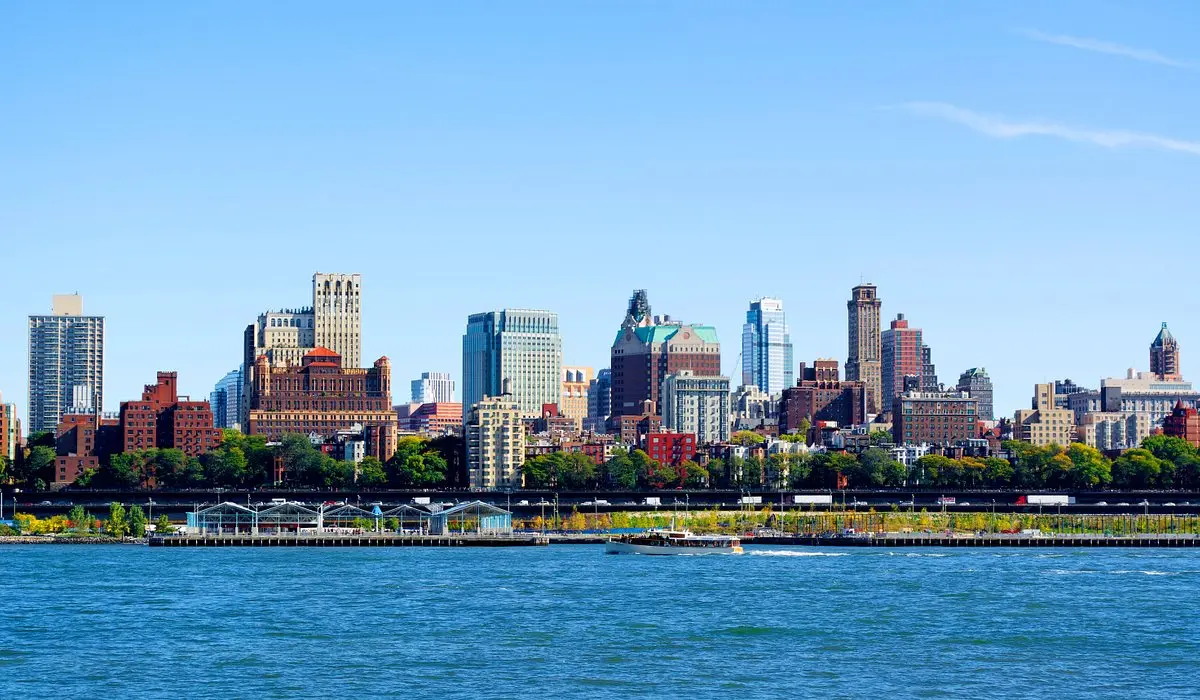
Between leaving an apartment in southern Brooklyn and arriving at a Midtown office, a subway rider passes through more distinct visual environments than most car commuters do in a day.

Here’s what that sequence actually looks like from a lens perspective.

The apartment and building lobby. Interior lighting — LED, incandescent, or fluorescent depending on your building’s age. No UV. Lenses stay completely clear. No activation, no transition. This is the baseline.

The walk to the station. Variable. On a summer morning, even a three-minute walk down a residential Brooklyn block involves meaningful UV exposure. Lenses begin activating at street level. On an overcast November morning, the activation may be minimal. The lens responds to actual UV intensity, not perceived brightness — so cloudy days produce less darkening even when the sky feels bright.

The underground platform. UV-free. Artificial fluorescent light. However activated your lenses became on the walk over, they begin clearing on the stairs and continue toward transparency on the platform. There’s no premature darkening underground because there’s no UV to trigger it. This matters more than most new Transitions wearers expect — it means you’re not navigating a dim platform with tinted lenses.

The train. Same UV-free environment. Lenses continue to clear during the ride.

Emerging at the destination station. Outdoor exposure resumes. If you exit onto Flatbush Avenue, a Midtown sidewalk, or anywhere with direct sky exposure, UV activation restarts within seconds. Summer morning sun reflecting off glass buildings is among the highest UV-intensity environments in a typical commuter’s day. Winter’s low-angle morning sun cuts across the sidewalk differently but still delivers UV. Either way, the lens adapts at the moment you actually need it.

The office. Indoor lighting, no UV, lenses move toward clear. A south-facing window with direct sun can sustain some activation, but typical office conditions return lenses to near-transparency within a few minutes.

Lunch, afternoon errands, the commute home. The entire sequence runs in reverse, and then again. Multiple outdoor exposures, multiple interior clearings. That cycle repeating five days a week is precisely what photochromic lenses are engineered to handle.

“The lens responds to actual UV intensity, not perceived brightness.”

Block 03

The Physics Behind the Darkening — Why Platform Darkness Doesn’t Trigger It.

Photochromic lenses respond to ultraviolet radiation, not to dim lighting or visual glare.

This single fact clears up most of the confusion that comes up in a Transitions conversation.

When UV light reaches the lens surface, it initiates a photochemical reaction in molecules embedded either in a surface coating or distributed throughout the lens material, depending on the specific product. Those molecules change configuration in response to UV exposure, causing the lens to absorb more visible light and appear darker. Remove the UV source, and the molecules revert. The lens clears.

The speed of that clearing — called fade-back — is where older photochromic technology genuinely had problems. First- and second-generation Transitions lenses from the 1990s and early 2000s could take fifteen to twenty minutes to clear after extended sun exposure. That reputation still follows the category. It’s worth saying plainly: it no longer reflects current products. Modern photochromic lenses under typical indoor conditions clear to near-transparency in roughly three to five minutes.

One variable that slows fade-back: cold temperatures. The photochromic chemistry responds to thermal conditions as well as UV. On a January morning when lenses have been activated in the cold and you walk into a warm Midtown lobby, the clearing happens more quickly because indoor warmth accelerates the reversal. The same lenses activated in cold air while waiting for a delayed B train, then carried into a cold office, may take a few minutes longer. This is a known property of the chemistry, not a product defect, and knowing it in advance makes the experience a better one.

Block 04

Two Questions That Come Up Before Almost Every Photochromic Purchase.

In over 35 years of fitting photochromic lenses, two specific concerns come up before nearly every purchase.

Both deserve honest, direct answers.

Do They Actually Darken in the Car?

No — not fully, with standard photochromic lenses. Modern car windshields contain UV-filtering compounds that block the radiation photochromic molecules respond to. A standard Transitions Signature lens sitting behind UV-blocking glass receives insufficient UV signal to activate fully. On a bright afternoon on the Belt Parkway or the BQE, those lenses may show minimal darkening even under intense visible glare.

This is the lens responding accurately to its UV environment, not malfunctioning. But for commuters whose routines include significant driving, it’s a real practical limitation.

Transitions XTRActive lenses are formulated to respond to visible light in addition to UV. They activate partially in brightly lit indoor environments and more fully behind glass, reaching a darker shade in a car than standard photochromic lenses achieve. If your daily routine includes both subway commuting and regular driving, that distinction should be part of the conversation before the lab order is placed.

Will They Look Tinted at My Desk?

For most wearers in a normally lit office, standard photochromic lenses appear essentially clear. There may be a faint residual tint, but under typical overhead lighting conditions it’s imperceptible to most people you’d interact with.

The honest qualification: lens generations optimized for maximum outdoor darkness sometimes carry slightly more residual indoor tint as a design trade-off. Greater outdoor performance depth can mean marginally slower fade-back. Which generation fits best depends on how you balance those priorities — and that conversation belongs before the lab order, not after you pick up the glasses.

Block 05

An Honest Assessment of Who These Lenses Actually Serve.

Photochromic lenses perform best when matched to a lifestyle that creates repeated, meaningful UV transitions throughout the day.

They’re a strong practical fit if your routine involves moving between outdoor and indoor environments multiple times daily, if you’ve been managing outdoor brightness by squinting or carrying a second pair, or if clip-on sunglasses have never quite worked with your frame. They handle transitional outdoor conditions — partly cloudy days, shaded sidewalks, early morning light on the walk from the station — particularly well, because they modulate to actual UV intensity rather than switching between two fixed states.

Where the fit weakens: if most of your outdoor time is spent inside a vehicle rather than walking, standard photochromic lenses alone may not deliver the outdoor protection you’re expecting. That shifts the conversation either toward XTRActive or toward a dedicated pair of prescription sunglasses as a second option. Both are reasonable, and a fitting is the right place to work through which combination makes sense for how you actually live.

The lens has to match the life it’s being asked to serve. That match — not the lens generation itself — is what determines whether Transitions lenses feel useful or like an expensive afterthought.

“The lens has to match the life it’s being asked to serve.”

Block 06

About the Optician Behind These Recommendations.

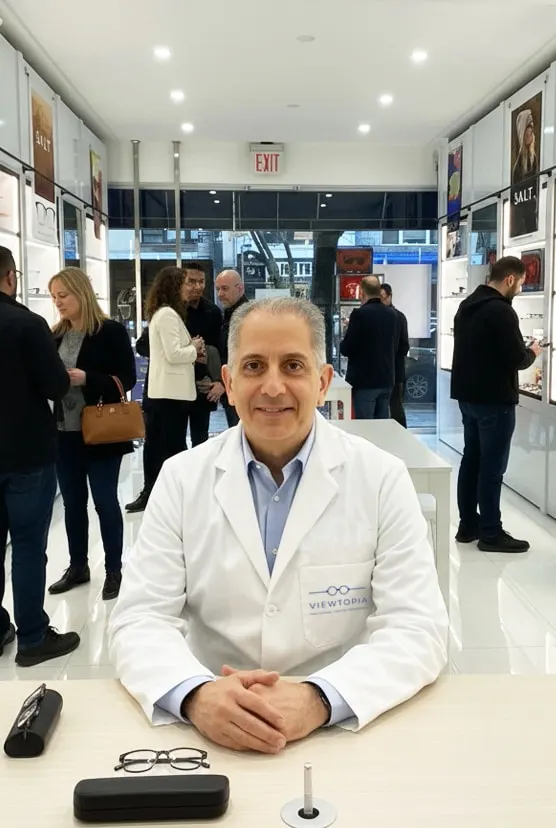
I hold the Transitions Experts Course certification from Essilor/Transitions Optical — the same credential the manufacturer requires of its own educators.

I’ve been fitting photochromic lenses at this Kings Highway location for over 35 years. The patients I see come from Sheepshead Bay, Flatbush, Midwood, Gravesend, Bensonhurst, Marine Park, and across the borough.

The Transitions conversation I have with a patient who rides the B or Q to work every day is different from the one I have with someone who drives or works entirely indoors. Commute structure matters to the recommendation. That specificity is the point of a real consultation rather than a product description.

Questions before your visit? Call 718-676-0260 and we can talk through whether your routine is a strong fit before you make the trip.

Block 07

Come In With Your Prescription and Your Commute Pattern.

Viewtopia Optical is at 810 Kings Highway in Brooklyn, directly above the B and Q trains at Kings Highway station.

No appointment is needed for a lens consultation. Bring your current prescription, describe your actual daily routine, and I’ll tell you honestly whether photochromic lenses are worth adding — and if so, which generation fits your situation.

Walk-ins are welcome during business hours. You can also reach us to ask questions before visiting.

Call 718-676-0260

810 Kings Highway, Brooklyn, NY 11223

NYS Optician License #005762-01  ·  ABO-NCLE Certificate #018067  ·  Transitions Experts Course Certification