Progressive Lenses Fitted for Complex Prescriptions in Brooklyn, NY

Fitting height measured in your chosen frame, on your face — not estimated from a chart. Walk in to 810 Kings Highway with your current Rx. No appointment needed.

what-are-progressive-eyeglasses-and-why-do-i-need-them-hero
Why The Fitting Matters

Progressive lenses that fail usually fail at the fitting, not at the patient.

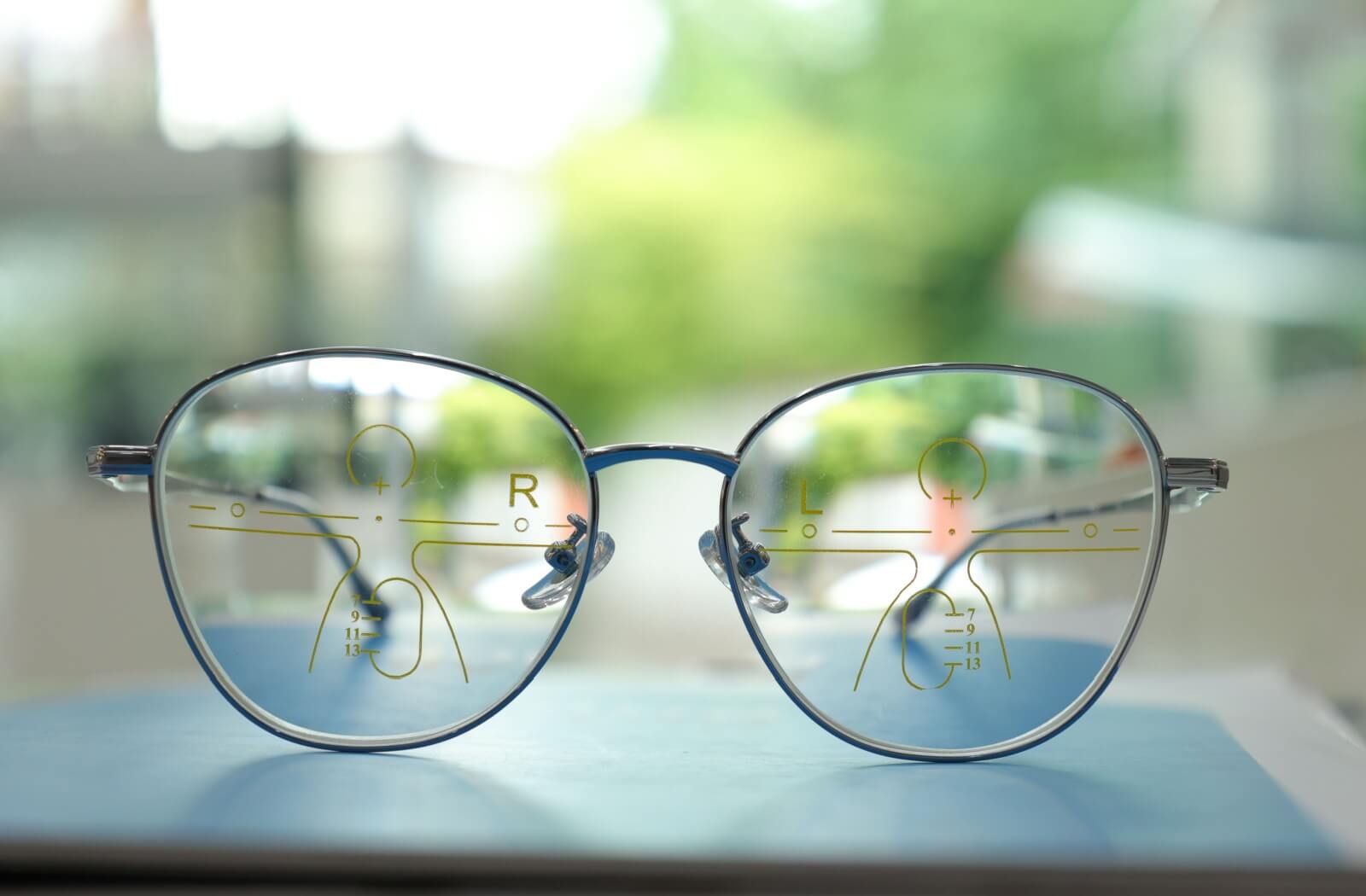
Progressive lenses — no-line multifocal lenses — correct presbyopia by building a smooth power transition from distance at the top of the lens to near at the bottom. No visible line. No abrupt jump between focal zones. What makes them technically demanding isn’t the design itself. It’s the precision the fitting requires.

A progressive lens has to be placed exactly inside a specific frame on a specific face. When that placement is off — even by a few millimeters — the reading zone lands in the wrong position, the distance zone blurs, and the patient gets headaches and concludes progressives don’t work for them. They do work, when fitted correctly.

Fitting Multifocals Since Before They Were Digital

Thirty-five years of progressive lens fittings teaches you what actually goes wrong.

Viewtopia Optical has been fitting progressive lenses at 810 Kings Highway for over 35 years — long enough to have worked through every generation of multifocal lens design, from conventional to digital free-form. The technology has changed substantially while the fitting fundamentals have not.

Progressive lens fitting rewards accumulated clinical experience because no two prescriptions present the same corridor challenge. A +1.50 add in a patient with low myopia is a different fitting problem than a +2.25 add paired with significant astigmatism. Over 35 years at this Kings Highway location, both — and everything between them — have come through the door regularly. For prescriptions in the strong-myopia range, see the high-index lenses page.

Experience
35+ Years

Fitting progressives since the conventional era

NYS Licensed
License No. 005762-01

Authorized to dispense in New York State

ABO & NCLE
Certificate No. 018067

Multifocal fitting competency, corridor geometry, dispensing

The Boutique
A working atelier, not a chain store.
Craftsmanship
Hand-adjusted every detail.
Heritage
Three and a half decades of judgment.
What Actually Causes Adaptation Problems

Three fitting variables that determine whether progressives work or fail.

The most common cause of difficult progressive adaptation isn’t the patient’s eyes. It’s the fitting. Three measurements determine whether your reading zone lands where your eyes naturally drop, whether your distance zone stays in your line of sight, and whether the peripheral distortion stays manageable. All three are taken with your chosen frame on your face — not estimated from a chart.

01
Fitting Height

Pupil to lens bottom

The vertical distance from the center of your pupil to the bottom of the lens. Too high and you can’t reach the reading zone without dropping your chin. Too low and the distance zone slides out of your line of sight. Measured with the frame on your face — never carried over from your last pair.

02
Pantoscopic Tilt

Frame angle to eye

The slight downward angle of the frame’s lens plane relative to your eye. It determines whether your distance and reading zones land where they should. Measured in the frame you actually wear, adjusted before recording — about 90 seconds, and it changes everything about the optical math.

03
Corridor Width

What the frame can support

The progressive corridor — the narrow vertical channel through which power transitions from distance to near — is only as wide as the frame’s vertical depth allows. A shallow frame may look right on the display but won’t support your add power. You’ll know that before anything is ordered.

If you’ve been fitted for progressives before and they never felt right, bring them in. The lens tells a story. Abe can usually identify what went wrong and what a different fitting approach would change.

The Adaptation Timeline You Can Realistically Expect

Don't ask your neighbor how long their adaptation took. Adaptation time is almost entirely determined by how accurate the fitting measurements were.

A correctly fitted progressive lens typically becomes comfortable within seven to fourteen days. The first three days feel unfamiliar. By week two, most patients stop noticing the glasses at all. If you’re still struggling at week three, come back in — adjustments on a pair fitted here are included, no charge.

Our Standards For Every Fitting

How every progressive fitting is measured — specifically, not generally.

Every progressive lens order at Viewtopia begins with one step that makes all subsequent measurements accurate: you choose the frame before anything is recorded. The standards below apply to every progressive lens fitting at this counter.

01
Frame First

Frame Selection First

Fitting height is measured in your chosen frame — never before. The lens order is built around the frame, not the other way around. A frame that looks beautiful on the display stand might not support the corridor width your prescription needs. You’ll know that before anything is ordered.

02
Monocular Math

Monocular Measurements

Each eye’s position is measured independently. If your eyes aren’t perfectly symmetrical — and few people’s are — the measurements reflect that. Averaging the two distances introduces optical-center error that shows up as eye strain after a few hours of wear.

03
Tilt Verified

Pantoscopic Tilt Verification

The frame is adjusted to its natural tilt before the fitting height is recorded, because the tilt determines where the distance and reading zones actually land. This step takes about 90 seconds and changes everything about the optical math.

04
Corridor Check

Corridor Width Assessment

Confirmation that the frame’s vertical depth supports the corridor width your add power requires. A shallow frame compresses the corridor and narrows the usable reading zone — for stronger adds (+2.00 and above), frame depth becomes a primary selection criterion.

05
Free-Form Option

Digital Free-Form Consideration

Computer-surfaced lenses with personalized optics calculated to your individual measurements — vertex distance, frame wrap, pantoscopic tilt in degrees. The result is typically a wider usable corridor and faster adaptation. Whether the upgrade serves your prescription is explained before it’s recommended.

06
No Estimates

No Standard Charts or Carryovers

Nothing is approximated from a previous pair or estimated from a frame’s listed dimensions. Every measurement is taken the day you choose your frame, with the frame on your face, at the tilt the frame holds in normal wear.

A Pair Of Lenses Tells A Story

If a previous pair of progressives never worked, bring them in — Abe can usually identify what went wrong.

Choosing Your Frame First

Three phases — why the order of steps matters.

From prescription review through final verification, every progressive lens fitting at this counter follows a defined sequence — and the sequence itself is what makes the measurements accurate.

Phase One

Prescription Review

Abe starts with the prescription — every field reviewed, every value confirmed within expected range for the patient’s age and vision history. Strong add powers (+2.25 and above) require specific corridor considerations. High sphere values paired with significant astigmatism need extra attention to optical center precision.

Then he looks at your face — face width, nose bridge, interpupillary geometry, pupil height from the lower lid. These determine which frame shapes work optically before any aesthetics enter the conversation.

Phase Two

Frame Selection & Measurement

Frame selection happens with Abe present. He brings out frames that work for the measurements taken — narrowed down by what looks right on your face and what fits your lifestyle, whether you’re at a desk, outdoors, or moving between both.

Once the frame is chosen, the fitting height is taken with the frame at its natural pantoscopic tilt on your face. That number goes directly onto the lab order — not rounded, not estimated. For digital free-form lenses, additional measurements (vertex distance, frame wrap, tilt in degrees) are included in the lab spec.

Phase Three

Verification Before Pickup

When your progressives come back, Abe verifies them before you pick them up. The distance zone power is confirmed, the near zone is checked against the prescribed add, and the fitting height is verified against what was recorded.

Then you put them on. Pantoscopic tilt, frame position, and vertex distance are all checked. Any refinement happens before you leave — the goal is that you walk out with progressives already positioned correctly, not a pair you’ll need to return after a week of struggling.

The Destination

Find us on Kings Highway.

Steps from the Kings Highway B and Q station, in the heart of southern Brooklyn. No appointment needed — walk in with your current prescription during business hours.

Address

810 Kings Highway
Bet. East 8th & 9th
Brooklyn, NY 11223

Telephone
Hours

Monday – Wednesday10:00 AM – 6:00 PM

Thursday10:00 AM – 7:00 PM

Friday10:00 AM – 1:00 PM

SaturdayClosed

Sunday11:00 AM – 5:00 PM

Gravesend · Midwood · Bensonhurst · Sheepshead Bay · Flatbush · Bay Ridge · Manhattan

Start Your Progressive Lens Fitting

Bring your current Rx.
Walk in anytime.

Viewtopia Optical fits progressive lenses at 810 Kings Highway — no appointment required. If you’re unsure whether your prescription is still current under New York State rules, call 718-676-0260 first. Full details are covered in How to Know When Your Eyeglass Prescription Has Expired.

If you’ve had progressive lenses before that never quite worked, bring those in too. A pair of lenses tells a story.

NYS License #005762-01  ·  ABO-NCLE Certificate #018067

Inquiries

Frequently
asked.

Common questions about fitting height, frame compatibility, free-form vs standard progressive lenses, and the adaptation process. If your question isn’t here, call or walk in.

Sometimes, but frame choice is directly tied to how the progressive lens performs. Before committing to reusing a frame, Abe checks the vertical depth to confirm it supports the corridor width your add power requires, and verifies the frame is in good enough condition to hold new lenses without flex. If the frame works, there’s no reason to replace it. If it’s too shallow or structurally compromised, he’ll explain why and show you alternatives.

Bifocals have a fixed, visible line separating the distance and reading zones — the placement of that line is measured once and the optical geometry is relatively straightforward. Progressives involve a graduated power corridor that transitions continuously from distance through intermediate to near, which means fitting height, pantoscopic tilt, corridor width, and frame vertical depth all interact. A small error in any one measurement affects the whole lens. The fitting process takes longer, requires more variables to be captured correctly, and is more sensitive to frame choice than a bifocal fitting.
Standard progressive lenses are manufactured using molds that produce a fixed lens design. Digital free-form progressives are computer-surfaced to your individual measurements — vertex distance, pantoscopic tilt, frame wrap — which means the optical math is personalized rather than generic. The result is typically a wider usable corridor, less peripheral distortion, and faster adaptation. Whether that upgrade is worth it depends on your prescription and how demanding your visual environment is. Abe gives a straight answer based on what he’s seeing in your Rx, not a default upsell.

Frame compatibility comes down to two things: vertical depth and nose bridge fit. A frame with at least 28 to 30 millimeters of vertical lens depth gives most prescriptions enough room for a usable corridor. A nose bridge that sits too high or too low shifts the entire optical center off-axis. Abe selects frames before taking any measurements, and will tell you immediately if a frame you’ve brought in or chosen won’t support your add power. That conversation happens before anything is ordered.

Yes, and it’s worth knowing why. High myopia paired with a meaningful add power creates a fitting scenario where the corridor geometry is less forgiving and the lens design options narrow. The optical center has to be placed with less margin for error, and the choice between standard and free-form progressive design often becomes more consequential. Patients in this situation benefit most from monocular measurement and a frame chosen specifically to support the corridor — which is exactly how every fitting here is approached. Bring your current prescription and Abe will review it before any frames are discussed. See also the high-index lenses page.

Come back in. At two weeks, if distance still feels blurry, the reading zone is hard to find, or you’re getting headaches, those are measurable problems — not adaptation lag. Abe re-verifies the lens powers, rechecks the fitting height against what was ordered, and assesses pantoscopic tilt. The large majority of persistent adaptation issues resolve with a frame adjustment or a remeasurement. If the lens was made incorrectly, that’s addressed directly with the lab. Adjustments on a pair fitted here are included — no charge.