Broken Glasses Fixed at Kings Highway — By The Same Optician Who Fits Your Eyewear

Every repair includes a check of frame alignment and optical fit — not just the broken piece. Walk in to 810 Kings Highway. Same-day, no appointment needed.

Same Day, Walk In

You can walk into Viewtopia with broken glasses and leave with them working again. No appointment. No waiting for a callback. No being told to come back Thursday.

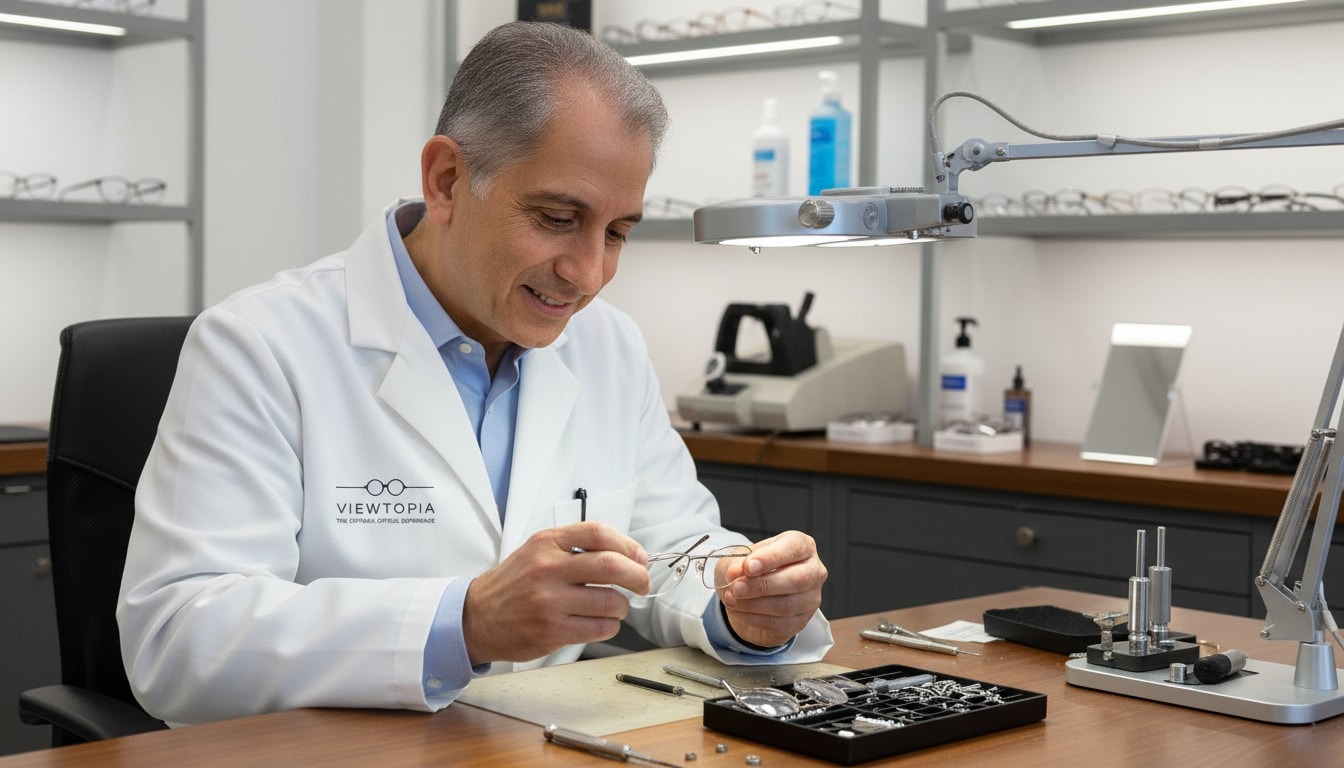
Eyeglass repair — the physical restoration of a damaged frame, including hinges, nose pads, screws, and bent bridges — is handled at 810 Kings Highway by Abe Zami, NYS Licensed Optician #005762-01. That credential matters for repairs the same way it matters for fitting a prescription. A damaged frame that can’t hold lenses safely or accurately isn’t fixed — it’s assembled.

Walk in. Describe what happened. Abe looks at it. The repair covers the underlying service too — see the prescription eyeglasses page for the dispensing standards every repair upholds.

Since The Neighborhood Knew Abe By Name

Long enough that Abe has repaired glasses for people who then brought in their kids.

Long enough that he’s seen every way a frame can break — and developed a practiced sense of which repairs hold and which ones lead to a longer conversation. Kings Highway is a dense, pedestrian-first neighborhood. People sit on glasses. Drop them on subway platform tiles. Catch a temple on a backpack strap leaving the B or Q. These are not unusual events — they happen within a few blocks of this shop every single day.

Proximity matters more than any other variable when glasses are broken. The patient with a damaged frame isn’t researching options. They need a result today. When repair isn’t possible and a new frame is the right answer, the frame fitting consultation picks up from there.

Experience
35+ Years

Repairing eyewear at this Brooklyn address

NYS Licensed
License No. 005762-01

Authorized to dispense in New York State

ABO & NCLE
Certificate No. 018067

Optical fitting & adjustment competency

The Boutique
A working atelier, not a chain store.
Craftsmanship
Hand-adjusted every detail.
Heritage
Three and a half decades of judgment.
What Breaks First — And What It Usually Means

Three failure points cover the majority of frame damage that walks in through the door.

Not every broken frame is worth fixing — and Abe will tell you that honestly. Here’s what typically breaks first, what it costs to address, and when the repair makes sense against the frame’s remaining life.

01
Barrel Hinges

Highest-wear point on the frame

The hinge connecting the temple to the frame front is the highest-wear point on any frame. On metal frames, a broken hinge can often be resoldered. On plastic frames, the repair depends on where the break occurred and whether the barrel is intact. Loose hinges usually trace to a loose or missing screw — under two minutes to fix.

02
Nose Pads

Most frequent single-component request

Worn, discolored, or broken nose pads are the most frequent single-component request at this counter. Replacement — silicone or push-in metal pads — takes minutes and changes how the frame sits on your face right away. Often the difference between a frame that slides and one that holds position all day.

03
Bent Or Twisted Frames

An optical problem, not just cosmetic

A dropped frame often lands unevenly. A skewed frame places one lens higher than the other relative to your pupils — that introduces prismatic distortion you adjust to without noticing. Frame realignment is an optical correction performed by someone with the training to know the difference.

When damage is severe — a snapped frame front, a shattered lens groove — Abe tells you directly whether the repair cost makes sense against the frame’s remaining life. That’s a real conversation, not a sales opportunity. Lens replacement is a separate service handled the same day, but with a lab order involved.

How A Repair Visit Actually Works

Walk in. Describe what happened. Abe looks at it.

No callback. No being told to come back Thursday. No technician working from a checklist. When Abe looks at broken glasses, he looks at the whole frame — not just the part that’s visibly damaged. Every repair includes a full frame alignment check before you walk out — included, never optional. Because a frame repaired without alignment can still place lenses slightly off-axis.

Repairs Handled On-Site

Six categories of repair, handled directly, on-site, the same day you walk in.

Lens replacement for broken lenses is a separate service — if the lenses survived the fall and only the frame is damaged, the categories below cover the work. If the lenses also need replacing, that’s same-day assessment, but a lab order is involved.

01
Hinges

Hinge Replacement

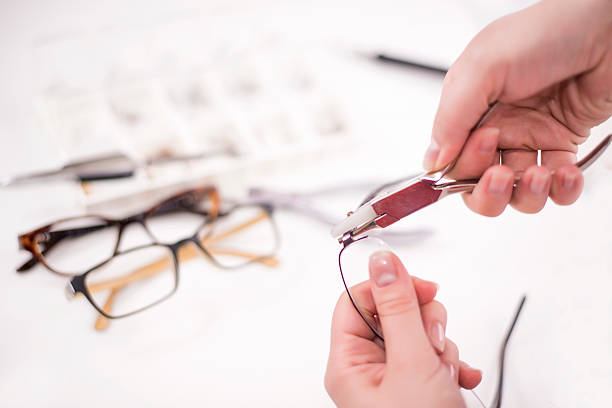
Barrel hinge repair or substitution for broken temple connections on metal and plastic frames. On metal frames, a broken hinge can often be resoldered. On plastic frames, the outcome depends on whether the barrel is intact and where the break occurred relative to the end piece.

02
Nose Pads

Nose Pad Replacement

Silicone and push-in metal nose pads replaced on adjustable-pad frames. Takes minutes. Changes how the frame sits on your face immediately — often the difference between a frame that slides all day and one that holds position correctly.

03
Screws

Barrel Screw Tightening & Replacement

Loose hinges are usually a loose or missing screw. Tightening or replacing one costs almost nothing and takes under two minutes. Resolves most hinge wobble without a full hinge replacement — the smallest fix that addresses the most common complaint.

04
Realignment

Frame Realignment

Bent, twisted, or asymmetric frames adjusted to restore proper lens positioning relative to the pupils. This is an optical correction, not a cosmetic reshape — a frame that’s slightly off-center creates more noticeable distortion when lens power is high. See the high-index lenses page for context on strong-Rx torque considerations.

05
Temples

Temple Adjustment

Temples bent to the correct angle and length for the patient’s ear geometry and face width. Most patients don’t realize how much a properly curved temple changes how the whole frame sits — the difference between glasses that rock forward and ones that stay put.

06
Frame Front

Frame Front Straightening

Dropped or impact-distorted frame fronts returned to even, symmetrical position. This affects where the lenses sit relative to your eyes — not just appearance. If the lens groove is shattered or the front is too distorted to hold optical alignment, Abe says so directly. Repair isn’t always the right answer.

A Repair That Holds

The goal is a repair that holds — not a transaction that closes.

What Happens During A Walk-In Repair Visit

Walk-in optical service means exactly that — arrive without an appointment, repair assessed right away.

Three phases run the entire visit — typically completed in a single appointment. The honest follow-up at the end is what separates a repair practice from a transaction.

Phase One

Assessment

Abe examines the frame. He identifies what’s broken, what’s bent, and whether the frame’s lens groove and hinge integrity can support the repair.

He explains what he sees in plain language. This takes a few minutes — and tells you before any work starts whether the repair is straightforward or whether there’s reason to think twice.

Phase Two

On-Site Repair

If the repair can be done on-site — hinge screw, nose pad, realignment, minor solder — it happens during the same visit. Abe tells you before he starts whether the work is straightforward or whether the frame is borderline.

Lens replacement and major reconstructive work require a lab order, which extends the timeline — but the assessment still happens the day you walk in.

Phase Three

Post-Repair Check & Honest Follow-Up

After the repair, Abe checks the full frame fit. Temples adjusted to the correct angle. Nose pads set to the right height. Frame positioned evenly. The glasses go back on your face correctly — not just back together.

If the frame has reached the end of its useful life — hinge housing cracked beyond reliable repair, frame front too distorted to hold alignment — Abe says so. That’s when a conversation about a new frame starts, if you want it. Not before.

The Destination

Find us on Kings Highway.

Steps from the Kings Highway B and Q station, in the heart of southern Brooklyn. No appointment needed — walk in with your current prescription during business hours.

Address

810 Kings Highway
Bet. East 8th & 9th
Brooklyn, NY 11223

Telephone
Hours

Monday – Wednesday10:00 AM – 6:00 PM

Thursday10:00 AM – 7:00 PM

Friday10:00 AM – 1:00 PM

SaturdayClosed

Sunday11:00 AM – 5:00 PM

Gravesend · Midwood · Bensonhurst · Sheepshead Bay · Flatbush · Bay Ridge · Manhattan

Come In With A Broken Frame

Leave with glasses that fit correctly again.
Same day. No appointment.

Broken glasses don’t improve sitting in a drawer. Bring your frame to 810 Kings Highway during business hours. Abe evaluates what happened, explains what can be done, and completes the repair the same visit when the work is on-site. Every repair includes the full alignment and fit check before you walk out.

Call 718-676-0260 to ask about a specific repair before making the trip. Or simply walk in. Either works.

NYS License #005762-01  ·  ABO-NCLE Certificate #018067

Inquiries

Frequently
asked.

Common questions about cracked hinges, realignment process, lens damage, discontinued frame parts, strong-Rx considerations, and bring-back warranty. If your question isn’t here, call or walk in.

It depends on where the crack is and how the frame is constructed. A crack at the barrel itself is more serious than a stripped screw hole. On metal frames, a cracked hinge housing can sometimes be resoldered if enough material remains. On plastic frames, the outcome depends on whether the crack runs through the lens groove or only through the end piece. Abe looks at it directly and tells you what is realistic — including when a repair will not hold long enough to be worth the cost.
Most realignment work is done with the lenses in place. Adjusting the temples, leveling the frame front, and resetting nose pad height are all performed on an assembled frame. If a specific repair requires removing a lens — to access a screw barrel, for example — Abe handles that during the visit and reseats the lens before you leave.
Surface scratches are visible under direct light. Edge chips show up along the lens rim or in the bevel groove. Stress cracks — internal fractures that do not always look dramatic — can affect optical clarity even when the lens looks intact. During the repair assessment, Abe checks the lens condition as part of the frame review. If the lenses need replacing rather than the frame, he will say so and explain what that involves separately.
This comes up regularly with older frames. When a manufacturer no longer produces a specific hinge, nose pad mount, or temple, the options depend on what is compatible. Generic barrel hinges fit a wide range of frames. On nose pads, the mount type — push-in versus screw-in — usually determines what is compatible across brands. For temples, a match is harder to find. Abe works with what exists and is direct when a workaround will not hold the way the original did.
Yes, and it is worth being careful. High-prescription lenses are heavier and place more torque on the hinge and nose pad system than standard lenses do. After repairing a frame worn with a strong prescription, the alignment check matters more, not less — a frame that is slightly off-center creates more noticeable distortion when the lens power is high. That is part of why the post-repair fit check is standard here. See the high-index lenses page for more on strong-Rx considerations.
Yes. If a repair fails within a short period under normal use — a resoldered hinge that separates again, a nose pad mount that does not stay seated — bring the frame back. Abe looks at what happened and determines whether the material failed or whether a different approach is needed. The goal is a repair that holds, not a transaction that closes.