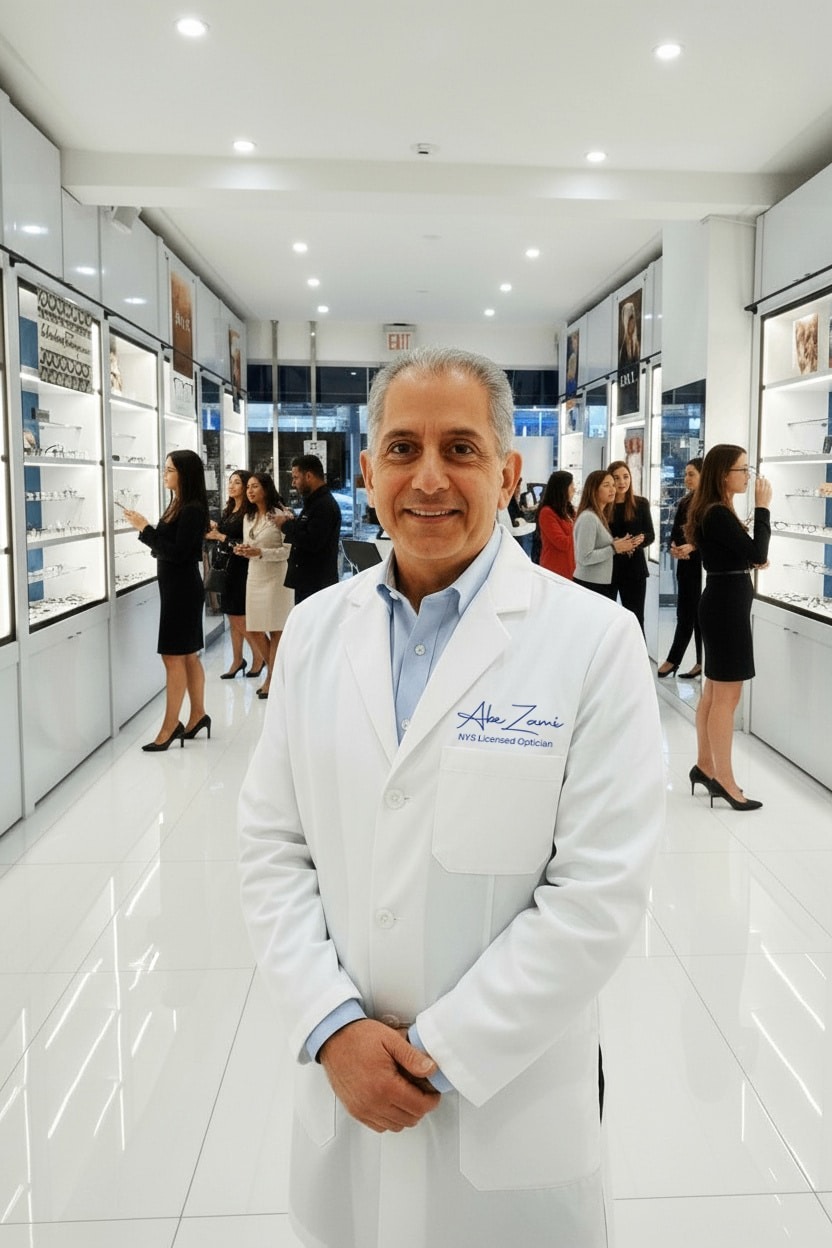
Designer Eyeglass Frames in Brooklyn — Curated European Brands, Expert Selection

Independent Italian and French optical brands selected for construction quality, not catalogue volume. Walk in to 810 Kings Highway for a personal frame consultation — no appointment needed.

Selected, Not Just Stocked

Every frame in the collection has earned its place on the board.

At Viewtopia Optical, every frame has been evaluated for hinge construction, acetate sourcing, lens zone geometry, and how it sits on an actual face. That means the selection is smaller. It also means every option in front of you is worth considering.

Acetate frames vary significantly in quality across price tiers. The difference shows up in how evenly a color runs through the material, whether the pattern holds its shape after heating, and how smoothly the hinge barrel operates after two years of daily use. These aren’t cosmetic differences — they affect how long a frame lasts and how well it holds the prescription lens in position.

Watching Which Frames Actually Get Worn

Experience with designer frames isn't measured in catalogue pages — it's measured in which frames patients return wearing five years later.

Abe Zami has been selecting and fitting frames at 810 Kings Highway since before most national optical chains had a foothold in southern Brooklyn. That history shapes the inventory in a very specific way: the frames Viewtopia carries reflect three and a half decades of watching which designs hold up under daily use, which hinge constructions stay tight through Brooklyn winters and summers, and which acetate colorways still look intentional after years of wear.

Flatbush residents who’ve been buying glasses here since the 1990s didn’t keep coming back because the inventory looked like a department store catalogue. They came back because the frames Abe recommended were still sitting comfortably on their faces three years later. If your prescription requires specific lens considerations, see the high-index lenses page or the progressive lenses page.

Experience
35+ Years

Selecting frames for this Brooklyn corridor

NYS Licensed
License No. 005762-01

Authorized to dispense in New York State

ABO & NCLE
Certificate No. 018067

National opticianry & dispensing standard

The Boutique
A working atelier, not a chain store.
Craftsmanship
Hand-adjusted every detail.
Heritage
Three and a half decades of judgment.
What Makes One Frame Worth More Than Another

A well-made frame affects how clearly you see — not just how you look.

There’s a fair question underneath every designer frame purchase: am I paying for quality, or am I paying for a logo? The honest answer is both, depending on where you buy. But the material differences between price tiers are real and verifiable — and they show up in three places.

01
Acetate Sourcing

Italian-grade material

Premium acetate from manufacturers like Mazzucchelli — based in Varese, Italy — produces color saturation and pattern stability that lower-grade materials cannot match. Color runs evenly through the material, holds its shape when heated for adjustment, and doesn’t fade unevenly over time. A material property, not marketing language.

02
Hinge Construction

Barrel count & metal gauge

The hinge mechanism is checked first. Adequate barrel count, appropriate metal gauge for the hinge size, opens and closes without play in the joint. A hinge that develops looseness after a year affects lens stability — and lens stability affects how the prescription performs.

03
Lens Zone Geometry

Shape, depth, curvature

The space inside the frame that houses the lens has a specific shape, depth, and curvature. For progressive lenses especially, that geometry determines whether all three focal zones can be positioned. A frame with insufficient vertical depth literally cannot accommodate a full progressive design. Clinical limitation, not preference.

The practical argument is straightforward. A quality acetate frame worn comfortably for five years costs less per day than a cheaper frame replaced twice in that same period — and one that holds the prescription correctly prevents the cost of headaches, remakes, and follow-up visits.

How The Frame Collection Gets Built

I don't carry every brand. I carry the ones I've handled enough to trust.

After 35 years, the inventory reflects accumulated judgment, not purchasing agreements. Frames that don’t hold up come off the board. Frames that consistently produce satisfied patients — patients who wear them every day, not occasionally — stay on it.

How A Frame Earns Its Place On The Board

Every frame at Viewtopia has passed a construction and fit evaluation before it reaches the board.

The selection process is not a one-time decision. The inventory gets reviewed. Frames that don’t hold up come off. Frames that consistently produce satisfied long-term wearers stay. After 35 years, that accumulated judgment shapes every option on display.

01
Hinge First

Hinge Mechanism Inspection

The hinge is checked first. Adequate barrel count, appropriate metal gauge for the hinge size, opens and closes without play in the joint. A hinge that develops looseness after a year affects lens stability — and lens stability affects how the prescription performs.

02
Acetate Quality

Acetate Material Evaluation

Color depth, pattern consistency, and the way the material behaves when heated. Quality acetate holds its shape reliably during adjustment and can be re-bent if a patient’s nose changes or the frame shifts after years of wear. Lower-grade material develops micro-fractures near the hinge barrel after two or three years.

03
Lens Zone

Lens Zone Geometry Check

Vertical depth for progressives. Bridge position for the face shapes the frame will fit. Temporal sweep for optical prescription compensation in wrap-style designs. The geometry has to support what the prescription requires — not the other way around.

04
Real-World Test

Daily Wear Observation

Abe watches how patients respond to a frame over time. Which ones come back for follow-ups still being worn three years later. Which ones end up in a drawer. That accumulated observation is something a catalogue cannot replicate.

05
Periodic Review

Inventory Review & Rotation

The board gets reviewed regularly. Frames that don’t hold up come off. Frames that consistently produce satisfied long-term wearers stay. New manufacturers are evaluated when there’s a reason — not because a distributor offered a volume discount.

06
Patient Match

Per-Patient Recommendation

When a patient walks in, the recommendation is built around their prescription, their wear pattern, and their face — not the frame Abe has the most of in stock. The right answer for one patient isn’t the right answer for the next.

The Inventory On Kings Highway

A curated board is not a small board — it's a vetted one.

What You're Choosing From

Three categories — each suited to different prescriptions, lifestyles, and wear patterns.

A patient who commutes on the B44 and wears glasses twelve hours a day needs something built differently from a patient who puts on readers for ninety minutes of evening work. Those distinctions are built into how the selection is presented.

Category One

Full Acetate

Plant-derived cellulose acetate from independent Italian and French manufacturers. The defining material for designer optical — valued for color depth, pattern complexity, and the way it can be heat-adjusted to a patient’s face.

Best suited for patients who want a frame that reads as considered, holds a strong personality, and can be re-adjusted as face shape changes over years of wear.

Category Two

Combination Metal-Acetate

Mixed-material construction pairing metal temples or bridge components with acetate fronts. The combination produces a lighter weight than full acetate while preserving the warmth and color depth of the acetate front.

Best suited for patients with longer days of wear, or for stronger prescriptions where weight distribution affects all-day comfort on the bridge.

Category Three

Titanium & Memory Metal

Lightweight titanium or flexible memory-metal construction — the lightest and most resilient options on the board. Engineered for active lifestyles and for high-index prescriptions that benefit from minimal frame weight.

Best suited for patients with active routines, strong prescriptions, or sensitivity to bridge pressure. Holds shape against accidental flexing in a way acetate cannot.

The Destination

Find us on Kings Highway.

Steps from the Kings Highway B and Q station, in the heart of southern Brooklyn. No appointment needed — walk in with your current prescription during business hours.

Address

810 Kings Highway
Bet. East 8th & 9th
Brooklyn, NY 11223

Telephone
Hours

Monday – Wednesday10:00 AM – 6:00 PM

Thursday10:00 AM – 7:00 PM

Friday10:00 AM – 1:00 PM

SaturdayClosed

Sunday11:00 AM – 5:00 PM

Gravesend · Midwood · Bensonhurst · Sheepshead Bay · Flatbush · Bay Ridge · Manhattan

Find Your Frame On Kings Highway

The right designer frame is out there. Finding it takes an expert who will tell you the truth.

Bring your current prescription. The frame’s lens zone geometry and material construction get checked against it before anything is recommended. The evaluation takes one visit — inventory reviewed, construction quality explained, and prescription compatibility confirmed before you commit.

Call 718-676-0260 or walk into 810 Kings Highway, Brooklyn, NY 11223. No appointment needed.

NYS License #005762-01  ·  ABO-NCLE Certificate #018067

Inquiries

Frequently
asked.

Common questions about designer frame quality, material differences, prescription compatibility, and how the inventory is selected. If your question isn’t here, call or walk in.

The term “designer” covers a wide range. At Viewtopia, it means frames from independent European manufacturers with verifiable material standards — proprietary acetate colorways, multi-barrel hinge construction, and lens zone geometry engineered for optical accuracy rather than mass-market cost targets. It’s not about the name on the temple arm. It’s about what the frame is made of and how it’s built.
Yes. Viewtopia offers lens replacement in existing frames. The frame gets evaluated first — hinge integrity, lens zone condition, and whether the geometry is compatible with your current prescription. If the frame is sound, new lenses can be cut to fit it. Details are on the Lens Replacement page.
A progressive lens requires a minimum corridor height — typically 14 to 18mm depending on the design — to fit all three focal zones (distance, intermediate, and near) within the lens. A frame with insufficient vertical depth compresses or eliminates one of those zones, usually the reading zone. This is a geometric constraint, not a preference. It’s one of the first things checked when a progressive patient selects a frame — covered in detail on the progressive lenses page.
Yes. High-index prescriptions require additional attention to lens zone shape and frame curve, because edge thickness and optical center placement are more sensitive to frame geometry at stronger powers. Some frame styles that work well for mild prescriptions create unwanted prismatic effects or visible edge thickness at higher powers. That evaluation is part of the frame selection process. The high-index lenses page covers the lens side of the equation.
A well-made acetate frame — properly fitted, stored correctly, and adjusted as needed — commonly lasts five to seven years. The limiting factors are usually hinge wear and accidental damage, not material degradation. Lower-grade acetate tends to develop micro-fractures near the hinge barrel after two to three years. That’s one of the reasons hinge construction is the first thing evaluated when a frame is considered for the Viewtopia inventory.
The specific brands on the board shift as Abe evaluates new manufacturers and retires lines that don’t hold up under daily use. The consistent criteria are independent ownership, proprietary acetate sourcing, and hinge engineering that can be physically verified — not just marketed. The best way to see the current selection is to come in. Call 718-676-0260 if you want to check availability for a specific style or material before making the trip from Sheepshead Bay, Midwood, or further out.
The frame prices at Viewtopia reflect what independent European optical manufacturing actually costs to source. In some cases that’s comparable to chain pricing. In others it’s higher — because the materials and construction aren’t equivalent. What’s different is that every frame on the board has been evaluated for construction quality before it’s offered, and the consultation is part of the visit rather than an upsell. Patients who’ve bought cheaper frames elsewhere and replaced them twice in three years often find the math works out differently than expected.