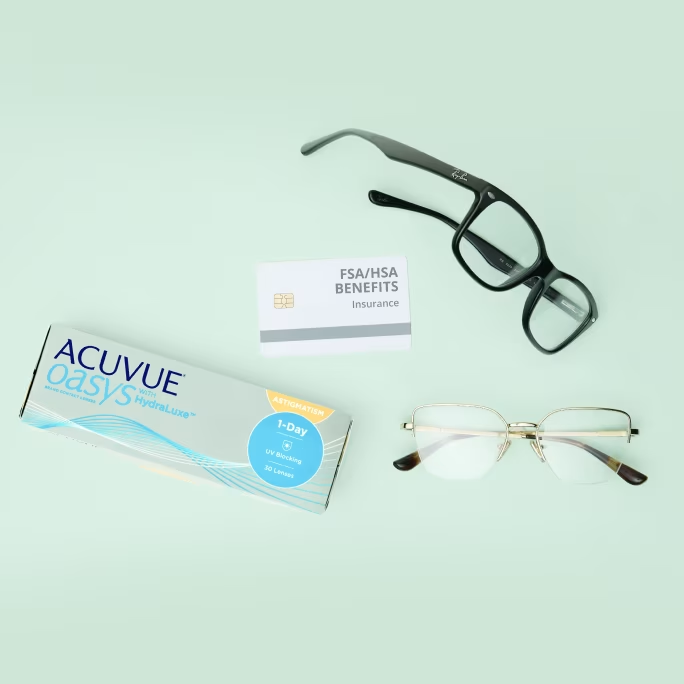
New Lenses in Your Existing Frames — Brooklyn Fitting, One Visit
Frame viability assessed before the order — no surprises when the lenses come back from the lab. Walk in to 810 Kings Highway with your frame and your Rx. No appointment needed.
New prescription lenses installed in a frame you already own. Two types of patients walk in for this — and the process serves both.
The first has a prescription that changed — the frame still fits, still looks right, still has years of life in it. Buying a whole new pair would be wasteful. A lens replacement order costs less than starting from scratch, and the result already fits the face it’s going home with.
The second has a frame they aren’t ready to give up — maybe a designer pair, maybe a vintage find with a shape they’ve never seen since. The frame is fine. The prescription is the problem. They want the lenses replaced without losing the frame. Either way, the frame gets looked at first — before anything is ordered.
Patients carry their frames in by hand — which is exactly how it should work.
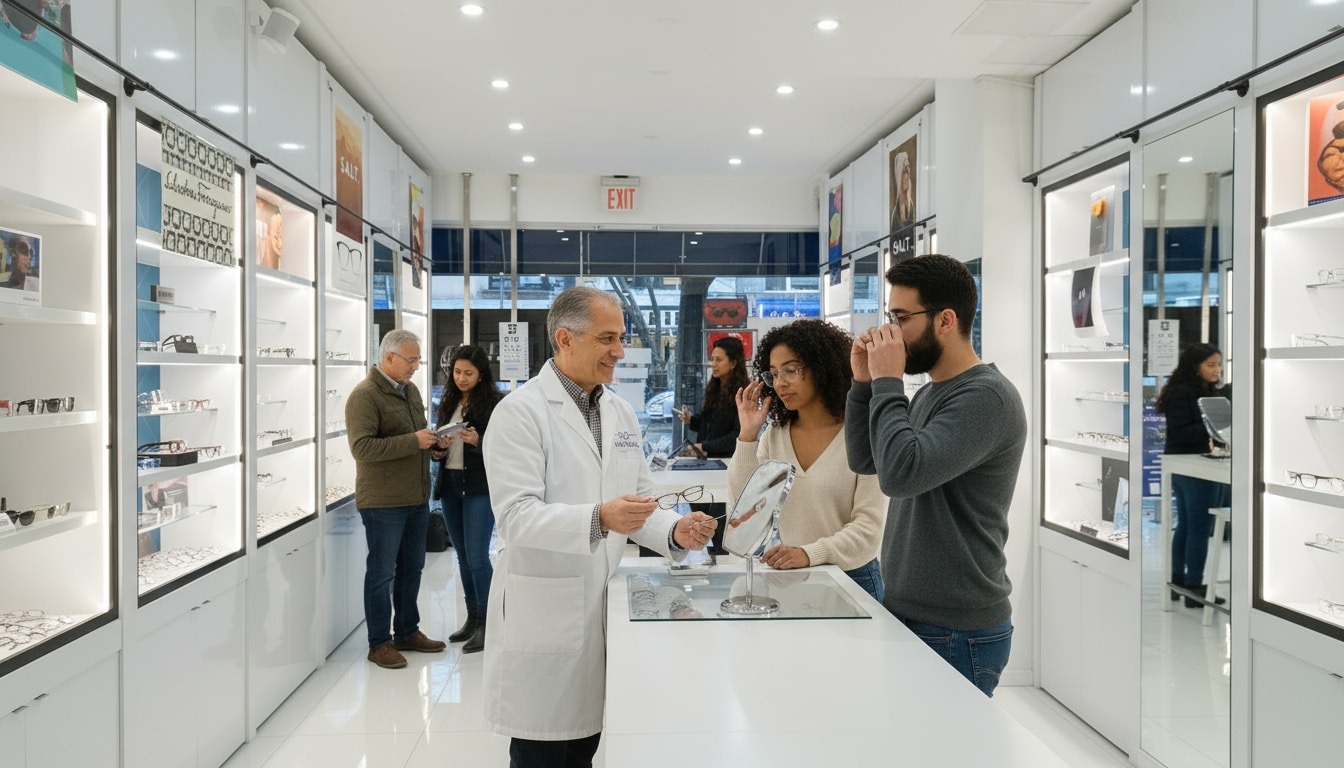
Viewtopia has been re-lensing patient-owned frames at 810 Kings Highway for over 35 years. Patients across southern Brooklyn bring their frames here because the assessment and the order happen in one visit. No mailing frames to a remote lab. No waiting a week to find out the frame didn’t survive the process.
Brooklyn frames come in all conditions. Some are designer acetate that’s been through years of daily wear. Some are metal alloys showing their age at the hinges. Some are perfectly intact, just carrying lenses that no longer match the prescription. A frame being considered for lens replacement should be in the optician’s hands — not in a shipping box.
Re-lensing patient-owned frames at this address
Authorized to dispense in New York State
Manufacturer-level photochromic lens training
Every lens replacement order at Viewtopia starts with a frame viability assessment — before anything else happens.
The assessment takes a few minutes. Abe looks at three things specifically, each of which can sink a lens replacement order if it isn’t caught before fabrication. A frame passing all three checks means the lenses coming back from the lab will seat correctly, sit correctly, and perform the way the prescription expects.
Where the lens position depends on it
A worn or loose hinge moves during wear — and that changes where the lens sits relative to the eye. That changes how the prescription performs. A hinge that would fail the first week back in use gets caught before the order is placed. Sometimes the fix is minor; sometimes it changes the conversation.
The most common viability failure
The channel inside the frame’s rim that holds the lens edge in place. When it’s worn or cracked, the new lens won’t seat flush — it can tilt, or pop out entirely. Patients who’ve had lenses fall out of their glasses have often experienced exactly this failure. The groove was the cause.
Optical center alignment depends on it
A frame bent out of its original geometry over years of use places lenses off-axis — the correction is in the lens; the problem is in the geometry. For progressive replacements, vertical frame depth matters too: all three zones (distance, intermediate, near) need room. A small-oval frame may not give the reading zone enough space.
If a frame passes all checks, we proceed. If something doesn’t pass, Abe tells you plainly — what he found, what it means, and what the options are. That conversation happens before a single lens is ordered. ABO-NCLE Certificate #018067 covers the lens fabrication knowledge behind this assessment; NYS Optician License #005762-01 is the credential the state requires to make the call legally.
A frame considered for lens replacement should be in the optician's hands — not in a shipping box.
Abe has seen frames that looked perfect on the outside with lens grooves cracked through from the inside. Hinges that would hold through a re-lens and hinges that would fail the first week back in use. Frames with enough optical zone depth for a progressive lens and frames that, if ordered without checking, would have come back from the lab only to sit in a drawer. The assessment is professional judgment, not a sales filter.
The lens replacement process — one clear sequence, from frame check to finished pair.
The assessment, the prescription review, the lens selection, and the order all happen in one visit. The pickup adjustment happens when the lenses come back. No mailing frames. No waiting a week to find out the frame didn’t survive the process.
Frame Viability Inspection
Abe inspects the frame for hinge condition, lens groove integrity, frame warp, and optical zone dimensions. This happens in the same visit, in your presence. If the frame passes, the order proceeds. If something needs to be addressed first, that’s handled before the lens order goes out.
Frame Preparation (If Needed)
A loose hinge gets tightened. A misaligned frame gets adjusted. Anything that would compromise lens seating after fabrication is corrected at this stage. Better to fix the frame now than discover the issue when the lenses come back from the lab.
Prescription Verification
Your current Rx is reviewed. Abe confirms the values are within expected ranges and the notation is clear before fabrication begins. New York State requires a valid prescription before lenses can be fabricated — two years for adults, one year for patients under 18.
Lens Material Selection
Lens type and index material are chosen based on the prescription, the frame geometry, and your lifestyle. If the original lenses were standard plastic and the Rx has since increased, this is the visit to discuss high-index — covered in detail on the high-index lenses page.
Coating & Treatment Selection
AR coating, scratch resistance, UV protection, photochromic — each is reviewed against how you actually use the glasses. The lens coatings page covers the decision tree in detail. Lens options are chosen once; everything is ordered together.
Pickup Fitting & Verification
When the lenses come back, they’re installed and the fit is checked. Frame alignment, optical center position, pantoscopic tilt — each verified before you walk out. Adjustments happen at pickup, not on a follow-up visit.
The frame stays. The lenses get better.
A lens replacement order is the natural moment to improve on what the original lenses had.
The upgrade conversation happens during the same visit as the frame assessment. Three categories cover the upgrades that most often matter when patients bring frames back for new lenses — index material, AR coating, and photochromic options.
High-Index Material
If the original pair was fitted with standard plastic lenses and the prescription has since increased, this is the visit to discuss high-index — 1.60, 1.67, or 1.74 depending on the prescription.
High-index lenses are thinner and lighter than standard CR-39. In a frame the patient already loves, upgrading the lens material can change the entire wearing experience. The frame stays. The lenses get better. Full material specifics on the high-index lenses page.
Anti-Reflective Coating
If the original lenses didn’t have AR coating — or had a lower-grade version that’s since worn through — a coating upgrade changes how the lenses perform in office lighting, on screens, and at night behind the wheel.
Brooklyn’s combination of fluorescent office ceilings, LED storefronts, and nighttime driving makes AR coating genuinely useful for most patients. The full coating decision tree is on the lens coatings page.
Photochromic Lenses
Worth considering for patients who carry two pairs — clear for indoors, sunglasses for out. A single photochromic lens eliminates the swap.
Viewtopia holds the Transitions Experts Course certification from Essilor/Transitions Optical — manufacturer-level training in photochromic lens technology. When photochromic is recommended here, it’s based on direct expertise. See the Transitions lenses page for the full overview.
Find us on Kings Highway.
Steps from the Kings Highway B and Q station, in the heart of southern Brooklyn. No appointment needed — walk in with your current prescription during business hours.
810 Kings Highway
Bet. East 8th & 9th
Brooklyn, NY 11223
Monday – Wednesday10:00 AM – 6:00 PM
Thursday10:00 AM – 7:00 PM
Friday10:00 AM – 1:00 PM
SaturdayClosed
Sunday11:00 AM – 5:00 PM
Gravesend · Midwood · Bensonhurst · Sheepshead Bay · Flatbush · Bay Ridge · Manhattan
One visit covers the assessment and the order.
No mailing frames. No waiting a week.
Bring the frame in. Bring your current prescription. If you’re unsure whether the prescription is still within New York’s validity window, call first — Abe will tell you exactly what to expect before you make the trip.
No appointment needed. Walk in to 810 Kings Highway, Brooklyn, NY 11223 during business hours, and the assessment starts when you arrive. Call 718-676-0260 with questions first if you’d like.
NYS License #005762-01 · ABO-NCLE Certificate #018067
Frequently
asked.
Common questions about turnaround time, online-purchased frames, viability check outcomes, cost vs. new glasses, vintage and designer frames, and prescription validity. If your question isn’t here, call or walk in.